

State: Product Activated


Official Version
Official version provided by the developers. Licensed under the GNU GPL, allowing use on an unlimited number of sites.
Technical Support
Professional assistance with any technical issues. Support is included in the price. Read our Support Policy.
Guarantees and Safety
100% safe and fully functional product. Completely risk‑free. 14‑day money‑back guarantee. Read our Refund Policy.
In my WooCommerce builds, plugin WPC Product Quantity is usually a fast fix for stores that need tighter control over quantity logic: min/max, step values, default qty, and cleaner buying flows for wholesale, bundles, or MOQ-heavy catalogs.
It fits merchants who are tired of the raw Woo quantity field doing too little. I’ve seen it work best when the shop uses mostly native Woo templates and only light theme customization.
WPC Product Quantity doesn’t reinvent checkout logic; it rides on top of WooCommerce quantity hooks and validation. Global rules live in the plugin settings screen inside the WP admin, while per-product tweaks are typically stored as product meta. In practice, that means store-wide defaults come from wp_options, and item-level exceptions stay attached to the product.
Frontend behavior is lightweight: a small JS layer keeps the qty field in sync with step/min/max rules, while Woo still handles the cart request. If a theme overrides the quantity markup, the plugin can only enforce rules cleanly when the override still respects Woo’s expected input structure.
The most common failure is on variable products, quick-view popups, or AJAX cart drawers. The qty input gets re-rendered after variation change, but the old JS listener is gone. Fast fix: in your cache/optimization plugin, exclude Woo variation scripts from delay/minify, especially add-to-cart-variation.min.js, and check DevTools Console for wc_add_to_cart_variation_params errors.
Second mess: custom themes replacing woocommerce_quantity_input() with hardcoded markup. Then min/max or step rules look random. The fix is usually in yourtheme/woocommerce/global/quantity-input.php: revert to the native Woo field structure or remove the broken override.
If the plus/minus UI dies only after optimization, open DevTools → Network and confirm the frontend file from /wp-content/plugins/ is loading after Woo core assets, not getting merged into a broken deferred bundle.
All products we provide come only from official sources and verified developers. To confirm their integrity and safety, the archive has been scanned for viruses and malware. You can review the scan results at any time by clicking the button below.
View in VirusTotalThe copy I tested is activated and fully working, with no restrictions — personally verified. For this product type, a key is usually not required to run the plugin itself. What you normally lose without official activation is auto-updates from the vendor dashboard and direct support, not core runtime.
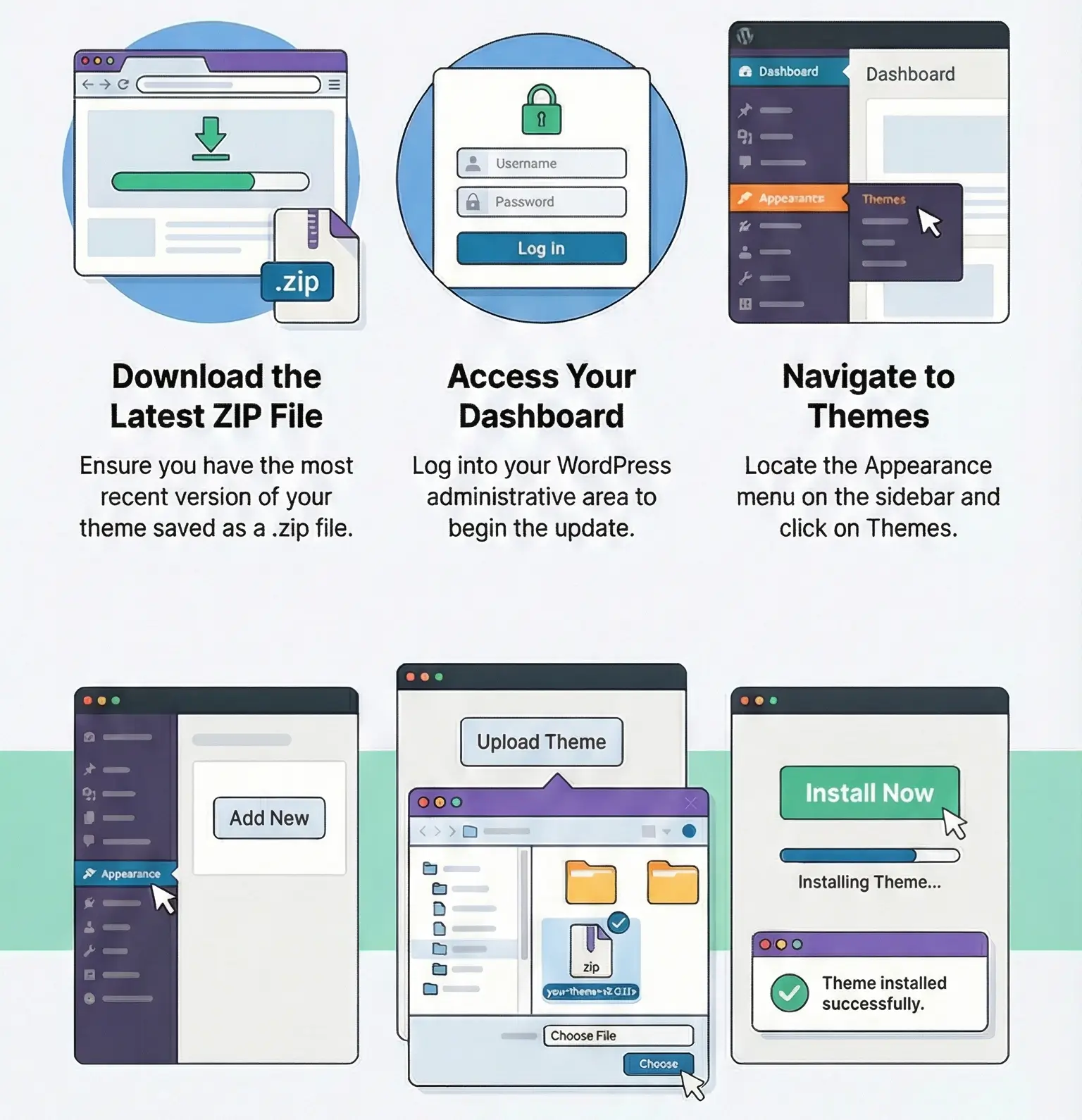
Manual updates are simple: upload the new ZIP in Plugins → Add New → Upload Plugin or overwrite via FTP. Settings stored in the database stay intact. Custom edits inside the plugin folder do not — those get overwritten, so put tweaks in snippets or theme-level hooks instead.
Because the variation form rebuilds the qty field. Exclude Woo variation JS from delay/minify first.
Yes, that’s the normal use case. Global defaults handle the baseline; product meta handles exceptions.
Not the saved settings. It will wipe direct edits inside plugin files.
Usually a theme override or JS optimization conflict. Check the quantity template override and Console errors before anything else.
You can use any product from our store on as many websites as you like.
After purchasing a product, you’ll be able to download it — including the most recent version — for the next 72 hours. Once that period ends, you can either repurchase the product or switch to one of our membership plans.
With an active membership, updates are always included. You’ll have continuous access to the latest versions for as long as your membership remains active, without worrying about expiration dates.
Yes, we do. In most cases, you can expect a reply within 24–72 business hours. For simpler issues, we’re often able to respond much sooner.
You can contact us via live chat or open a support ticket directly from the product page — whichever is more convenient for you.
No, there are no limits. We don’t believe in restricting downloads. If you need to download a product multiple times, that’s absolutely fine.
We use professional, high‑performance storage systems to ensure downloads are fast, stable, and hassle‑free.
No, license keys are not included. In the past, license sharing and related issues caused account problems, so we decided to stop distributing keys.
That said, all products you receive are fully authentic. For items that normally require activation, we provide them pre‑activated, allowing you to install and use them immediately without dealing with license input or activation errors.
Yes — 100%. All products are original and distributed under the GNU GPL v2/v3 license.
The main difference compared to purchasing directly from the original author is that we don’t offer additional services such as custom development or one‑on‑one support. License keys are also not included. Instead, products that typically require activation are delivered ready to use, allowing installation on unlimited websites.
Yes, we stand behind our products. If you encounter an issue that cannot be resolved or a technical problem without a workable solution, we’ll do our best to help — and if necessary, issue a full refund.
Please note that refunds are not available if the product works as described but simply does not meet personal expectations. We’ve also encountered cases where refund requests were made while the product was still in use, which we cannot allow.
Our approach is simple: fairness and transparency. If you ever have a concern, just reach out — we’re always open to finding a reasonable solution that works for both sides.



Reviews
There are no reviews yet.