
State: Product Activated


Official Version
Official version provided by the developers. Licensed under the GNU GPL, allowing use on an unlimited number of sites.
Technical Support
Professional assistance with any technical issues. Support is included in the price. Read our Support Policy.
Guarantees and Safety
100% safe and fully functional product. Completely risk‑free. 14‑day money‑back guarantee. Read our Refund Policy.
Riode is one of those themes I use when the client wants a polished WooCommerce storefront fast, with lots of prebuilt layouts, but without committing to a fully custom build. It fits agencies, niche shops, and general-purpose stores that need flexibility more than architectural purity. In plain terms: if the goal is “launch with a good-looking catalog, filters, product pages, and mobile UX without building every component from scratch,” Riode does that job well.
I don’t treat it as a lightweight base theme. It isn’t. Riode is a feature-heavy commercial Woo theme with its own design system, demo logic, WooCommerce styling layer, builder integration, and frontend scripts. That’s why it can save hours on page assembly. It’s also why I’m careful with updates, caching rules, and template overrides—because the theme is doing more than just painting CSS over WooCommerce.
Most site owners interact with Riode through its theme options, Customizer settings, header/footer builder, and demo/import panel. That part is database-driven: layout choices, typography, colors, header variants, mobile menu settings, shop page options, and many design toggles are stored in wp_options or post meta depending on the builder/module involved.
The storefront output itself is a mix of:
post_content or builder-specific metaThat split matters. Product data, orders, attributes, stock, and variation logic stay with WooCommerce. The theme does not own the commerce data. But the way category pages, product cards, notices, galleries, and account/shop wrappers render is heavily theme-controlled. If Riode has an outdated Woo template or a JS conflict, the store data is still there—the theme layer is what stops behaving.
What’s editable without code:
What is effectively hardcoded unless I override templates in a child theme:
That’s a normal commercial theme pattern, but it matters if someone expects full visual control from admin settings alone.
The most common breakage is not “Riode is bad.” It’s version mismatch between the theme, WooCommerce, and the page optimization stack.
I’ve seen this exact pattern many times: after enabling JS delay/minify in WP Rocket, LiteSpeed Cache, or Autoptimize, variable products stop updating price/image, quick view opens but stays empty, or mobile menu toggles stop responding. The mechanism is simple: the HTML is rendered server-side, but Woo and theme behaviors depend on frontend initializers running in the right order. Delay the wrong file, and the markup loads as a dead shell.
In DevTools → Console, I check for errors tied to:
jquery-corewc-add-to-cart-variationphotoswipeselectWooIn Network, I look for missing or delayed JS/CSS requests, especially on product pages. The fastest fix is usually this:
jquery-corewc-add-to-cart-variationOne page test is enough: open a variable product, switch attributes, and verify price/image/availability updates live. If that works, the stack is stable again.
The second recurring issue is WooCommerce template drift after updates. Riode overrides parts of Woo output, so if WooCommerce updates first and the theme lags behind, small things go wrong before big things do. Tabs shift, notices appear in odd places, product gallery behavior changes, cart fragments act inconsistently.
The first place I check is WooCommerce → Status. If outdated template overrides are listed there, I stop guessing. Update the theme first. If the client updated Woo too early, I either patch in staging or temporarily roll back WooCommerce until the matching Riode version is installed.
Performance is the third real-world pain point. Riode can look fast on a demo, then feel heavy on a live store with:
The mechanism is not mysterious: more sections mean more queries, more CSS, more JS, more layout work on mobile. I usually cut the weight in the theme panel first—disable features that are not being used, especially quick view, compare/wishlist integrations that nobody configured, and animation-heavy homepage blocks. Then I check Network for oversized CSS/JS and LCP elements in PageSpeed or Web Vitals debugging. In a lot of stores, the theme is not “broken”; it’s just doing too much at once.
All products we provide come only from official sources and verified developers. To confirm their integrity and safety, the archive has been scanned for viruses and malware. You can review the scan results at any time by clicking the button below.
View in VirusTotalOn my side, this product is activated, working, and personally checked. In general use, Riode runs without a license key once the theme files are installed. The site renders normally. What you typically lose without official activation is:
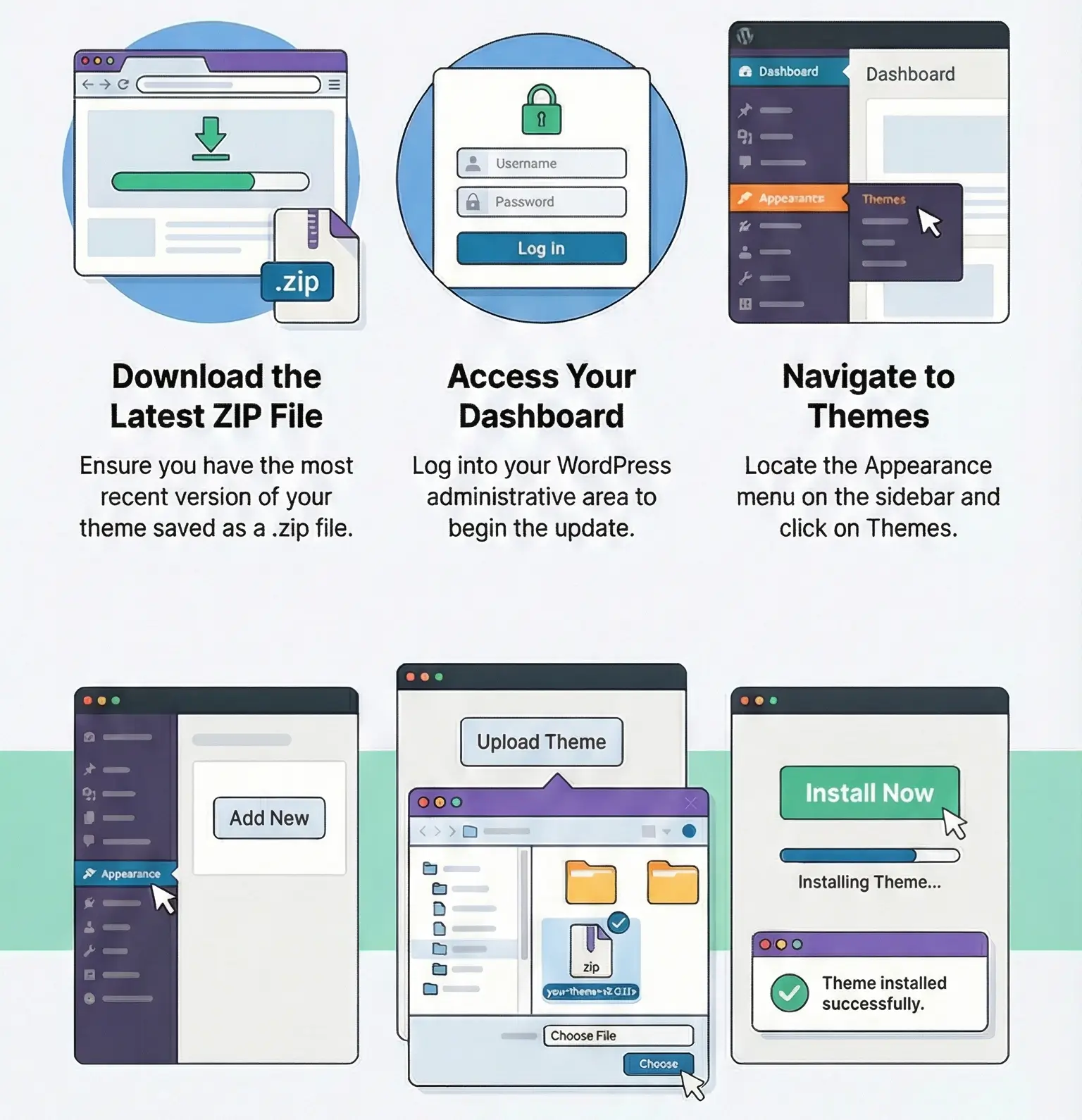
Manual updates are standard: upload the new theme ZIP in Appearance → Themes or replace the parent theme via FTP. If the package includes a required core plugin, update that too; otherwise the theme and its companion plugin can drift apart and features disappear from admin or frontend output.
One rule here is absolute: never customize the parent theme directly. Theme updates overwrite parent files. If I need to change templates, hooks, or functions, I do it in a child theme. If I need CSS fixes, I place them in the child theme stylesheet or controlled custom CSS, not inside vendor files.
Download Riode archive with the latest update and install it over the existing version. If there is no previous version installed, the theme can be installed using the standard method. You can find detailed instructions on how to update a theme or plugin on this page.
It’s much better as a WooCommerce theme than as a generic brochure theme. Its value comes from shop layouts, product presentation, and store UX features.
Because delayed JS broke Woo variation initialization. Exclude jquery-core, wc-add-to-cart-variation, and the main Riode frontend script from delay/defer.
No. You can change many layout and style options in the theme panel, but the actual loop markup is generated by theme templates and hooks. That needs a child theme override.
Yes, if you changed the parent theme directly. Use a child theme for PHP/template changes and keep custom CSS outside vendor files.
You can use any product from our store on as many websites as you like.
After purchasing a product, you’ll be able to download it — including the most recent version — for the next 72 hours. Once that period ends, you can either repurchase the product or switch to one of our membership plans.
With an active membership, updates are always included. You’ll have continuous access to the latest versions for as long as your membership remains active, without worrying about expiration dates.
Yes, we do. In most cases, you can expect a reply within 24–72 business hours. For simpler issues, we’re often able to respond much sooner.
You can contact us via live chat or open a support ticket directly from the product page — whichever is more convenient for you.
No, there are no limits. We don’t believe in restricting downloads. If you need to download a product multiple times, that’s absolutely fine.
We use professional, high‑performance storage systems to ensure downloads are fast, stable, and hassle‑free.
No, license keys are not included. In the past, license sharing and related issues caused account problems, so we decided to stop distributing keys.
That said, all products you receive are fully authentic. For items that normally require activation, we provide them pre‑activated, allowing you to install and use them immediately without dealing with license input or activation errors.
Yes — 100%. All products are original and distributed under the GNU GPL v2/v3 license.
The main difference compared to purchasing directly from the original author is that we don’t offer additional services such as custom development or one‑on‑one support. License keys are also not included. Instead, products that typically require activation are delivered ready to use, allowing installation on unlimited websites.
Yes, we stand behind our products. If you encounter an issue that cannot be resolved or a technical problem without a workable solution, we’ll do our best to help — and if necessary, issue a full refund.
Please note that refunds are not available if the product works as described but simply does not meet personal expectations. We’ve also encountered cases where refund requests were made while the product was still in use, which we cannot allow.
Our approach is simple: fairness and transparency. If you ever have a concern, just reach out — we’re always open to finding a reasonable solution that works for both sides.



Reviews
There are no reviews yet.