

State: Product Activated


Official Version
Official version provided by the developers. Licensed under the GNU GPL, allowing use on an unlimited number of sites.
Technical Support
Professional assistance with any technical issues. Support is included in the price. Read our Support Policy.
Guarantees and Safety
100% safe and fully functional product. Completely risk‑free. 14‑day money‑back guarantee. Read our Refund Policy.
Loobek is built for stores that want the modern Elementor + WooCommerce stack without starting from a blank frame. I’d use it for fashion, furniture, cosmetics, accessories, lifestyle catalogs—basically any shop where visual presentation matters as much as product filtering. It gives you polished demos, product grids, promotional blocks, mobile-friendly headers, and enough shop presets to get a store live quickly.
But this is not a “neutral” theme. Loobek is opinionated in the way many premium WooCommerce themes are: it wraps WooCommerce with its own templates, own CSS logic, own JavaScript for filters/search/sliders, and Elementor-based page sections. That’s why it feels complete out of the box. It’s also why breakage usually comes from the theme layer, not from WooCommerce data itself.
Most of the visible page content is controlled either by Elementor templates or by theme options. Headers, footers, shop archive layout, typography, colors, mobile menu behavior, and product page presentation are usually stored in wp_options, Customizer settings, or Elementor template/post meta.
The actual storefront rendering is split between three layers:
That distinction matters during troubleshooting. If the shop page suddenly looks broken after an update, the products are still in the database. What fails is usually one of these:
What you can edit safely from admin:
What is effectively hardcoded unless I override files in a child theme:
So yes, it’s flexible—but only up to the point the theme allows. After that, it becomes a child-theme job.
The first pattern I see is classic Elementor/WooCommerce/theme friction after updates. Loobek depends on the theme, Elementor, WooCommerce, and usually a required core plugin all staying in step. If WooCommerce updates first, or Elementor changes a frontend dependency, small visual bugs show up quickly: broken tabs, weird spacing in product summaries, filters half-working, empty quick view modals.
My first check is not guesswork. I open:
The files and handles that tend to matter most are:
jquery-corewc-add-to-cart-variationselectWooA very common real failure: variable products stop updating image or price after cache optimization. Mechanically, the form still exists, but wc_variation_form never initializes correctly because delayed JS loads too late or in the wrong order. The fix is specific:
jquery-corewc-add-to-cart-variationThen test on an actual variable product page, not just homepage banners.
The second issue is homepage heaviness. Loobek demos often look clean, but the live page can become slow if the admin keeps all the sliders, popups, tabbed products, Instagram sections, carousels, countdowns, and AJAX widgets. This isn’t abstract “theme bloat”; it’s a direct mix of more DOM nodes, more queries, more CSS, more JS execution, and more layout shift on mobile.
What I usually cut first:
That brings a larger gain than cosmetic CSS cleanup.
All products we provide come only from official sources and verified developers. To confirm their integrity and safety, the archive has been scanned for viruses and malware. You can review the scan results at any time by clicking the button below.
View in VirusTotalOn my side, this product is activated, working, and checked manually. In normal WordPress use, Loobek runs without requiring a key for basic frontend functionality. The site works once the theme and required plugins are installed. Without official license activation, what you usually lose is:
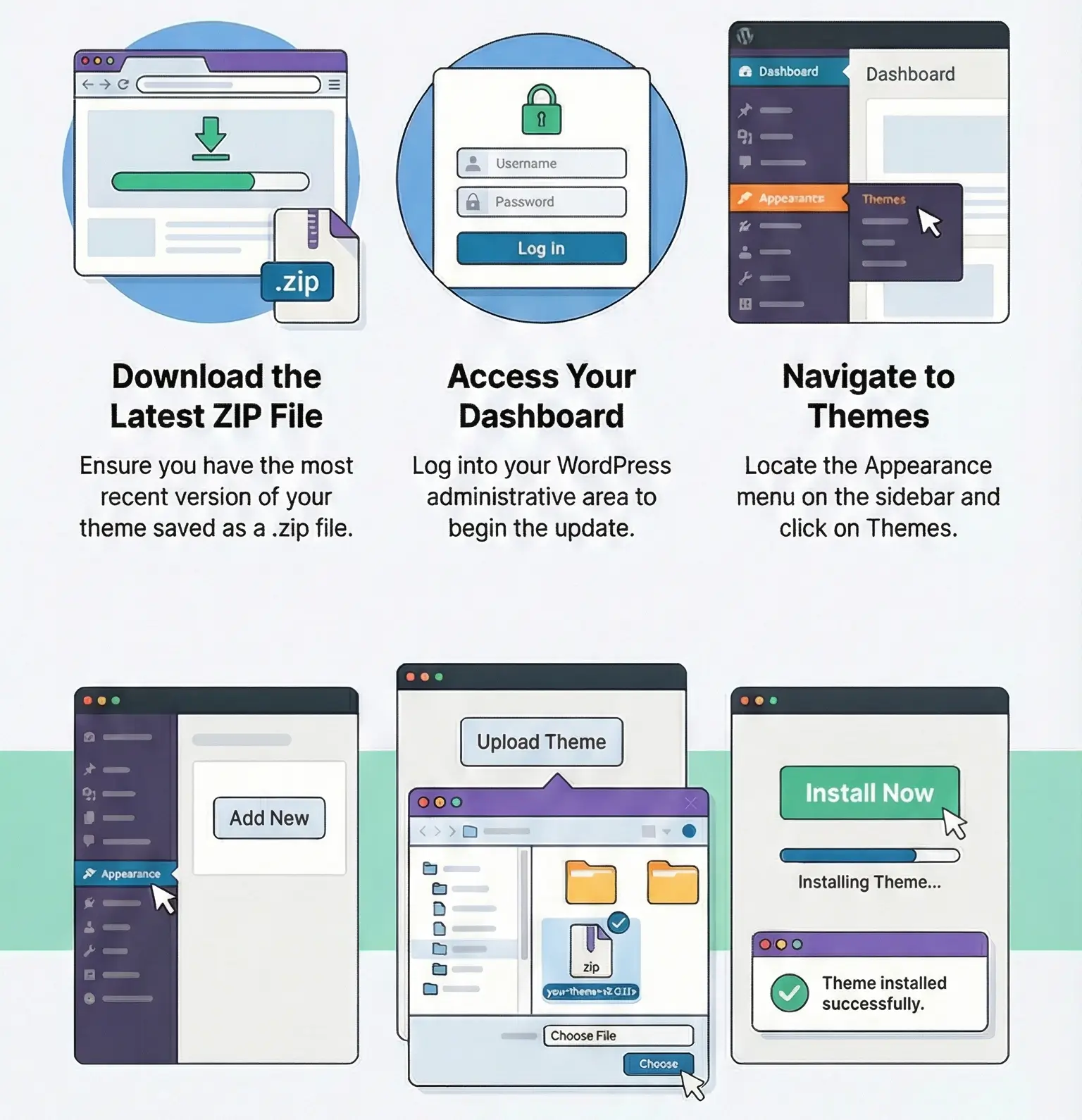
Manual updates are simple enough: upload the new theme ZIP via Appearance → Themes or replace the parent theme folder through FTP. If the theme ships with a companion/core plugin, update that too, because admin controls and frontend widgets often depend on version alignment between theme and plugin.
And the usual rule applies, but here it matters a lot: never edit the parent theme directly. If you patch Woo templates, move hooks, or add PHP changes inside the parent, the next update wipes them. I use a child theme for template overrides and structural changes; for simple styling, child theme CSS or Customizer CSS is fine.
It’s both, but the value is in the combination. Elementor handles content sections; the theme handles most of the store presentation and Woo-specific UX.
Because delayed/minified JS broke the initialization chain. Exclude jquery-core, wc-add-to-cart-variation, Elementor frontend assets, and the main theme script from aggressive delay.
Not usually. Elementor controls pages and some templates, but product loop markup is still theme-driven unless the theme provides a dedicated builder for it.
Yes, if those fixes were made in the parent theme. Use a child theme for PHP/template edits and keep custom assets outside vendor files.
You can use any product from our store on as many websites as you like.
After purchasing a product, you’ll be able to download it — including the most recent version — for the next 72 hours. Once that period ends, you can either repurchase the product or switch to one of our membership plans.
With an active membership, updates are always included. You’ll have continuous access to the latest versions for as long as your membership remains active, without worrying about expiration dates.
Yes, we do. In most cases, you can expect a reply within 24–72 business hours. For simpler issues, we’re often able to respond much sooner.
You can contact us via live chat or open a support ticket directly from the product page — whichever is more convenient for you.
No, there are no limits. We don’t believe in restricting downloads. If you need to download a product multiple times, that’s absolutely fine.
We use professional, high‑performance storage systems to ensure downloads are fast, stable, and hassle‑free.
No, license keys are not included. In the past, license sharing and related issues caused account problems, so we decided to stop distributing keys.
That said, all products you receive are fully authentic. For items that normally require activation, we provide them pre‑activated, allowing you to install and use them immediately without dealing with license input or activation errors.
Yes — 100%. All products are original and distributed under the GNU GPL v2/v3 license.
The main difference compared to purchasing directly from the original author is that we don’t offer additional services such as custom development or one‑on‑one support. License keys are also not included. Instead, products that typically require activation are delivered ready to use, allowing installation on unlimited websites.
Yes, we stand behind our products. If you encounter an issue that cannot be resolved or a technical problem without a workable solution, we’ll do our best to help — and if necessary, issue a full refund.
Please note that refunds are not available if the product works as described but simply does not meet personal expectations. We’ve also encountered cases where refund requests were made while the product was still in use, which we cannot allow.
Our approach is simple: fairness and transparency. If you ever have a concern, just reach out — we’re always open to finding a reasonable solution that works for both sides.





Reviews
There are no reviews yet.